Modal and lyocell are both wood-based cellulose fibres, but modal is made by a modified viscose process and lyocell by a closed-loop solvent process. Feel, strength, fibrillation, breathability, shrinkage and weight data from our records, dyeing, sustainability and care.
At a glance
6%modal shrinkage
7%lyocell shrinkage
Softermodal
Strongerlyocell
Modal and lyocell are both premium regenerated cellulose fibres made from wood pulp, but they are made by different processes and behave differently. Modal is made by a modified viscose process; it is very soft, smooth and stable, and it stays soft after many washes, which makes it ideal for underwear, T-shirts and sleepwear. Lyocell is made by dissolving pulp directly in a recovered solvent; it is stronger, especially when wet, has a cool, silky hand and a fluid drape, and its closed-loop process is often seen as cleaner, but it can fibrillate and, in knits, can be harder to stabilise.
This guide compares modal and lyocell on how they are made, feel, strength, breathability, shrinkage and weight control, fibrillation, pilling, dyeing, sustainability, cost and care, using our finishing records for modal and lyocell blends. It is written from the dye-house floor, where we dye and finish both fibres. Note that many people search for this comparison under a well-known lyocell brand name; this guide uses the generic fibre names.
How each is made
Modal: wood pulp, often beech, is converted to cellulose xanthate with caustic soda and carbon disulphide, dissolved and spun under modified conditions that give a high wet modulus fibre. Chemical recovery in the factory decides much of its environmental impact.
Lyocell: wood pulp is dissolved directly in N-methylmorpholine N-oxide (NMMO) and spun into fibres; the solvent is recovered and reused at a very high rate. No chemical change to the cellulose is needed, so the process is simpler. See what is lyocell fabric and what is modal fabric.
Modal vs lyocell at a glance
| Point | Modal | Lyocell |
|---|---|---|
| Process | Modified viscose | Direct solvent (NMMO), closed loop |
| Feel | Very soft, smooth, buttery | Cool, silky, smooth |
| Drape | Good | Very fluid |
| Dry strength | Good | Very high |
| Wet strength | Good | Very good |
| Fibrillation | Low | Can fibrillate (peach skin or white haze) |
| Moisture regain | ~11–12% | ~11–12% |
| Typical uses | Underwear, tees, sleepwear, sheets | Shirts, dresses, denim, sheets, towels |
What our records show
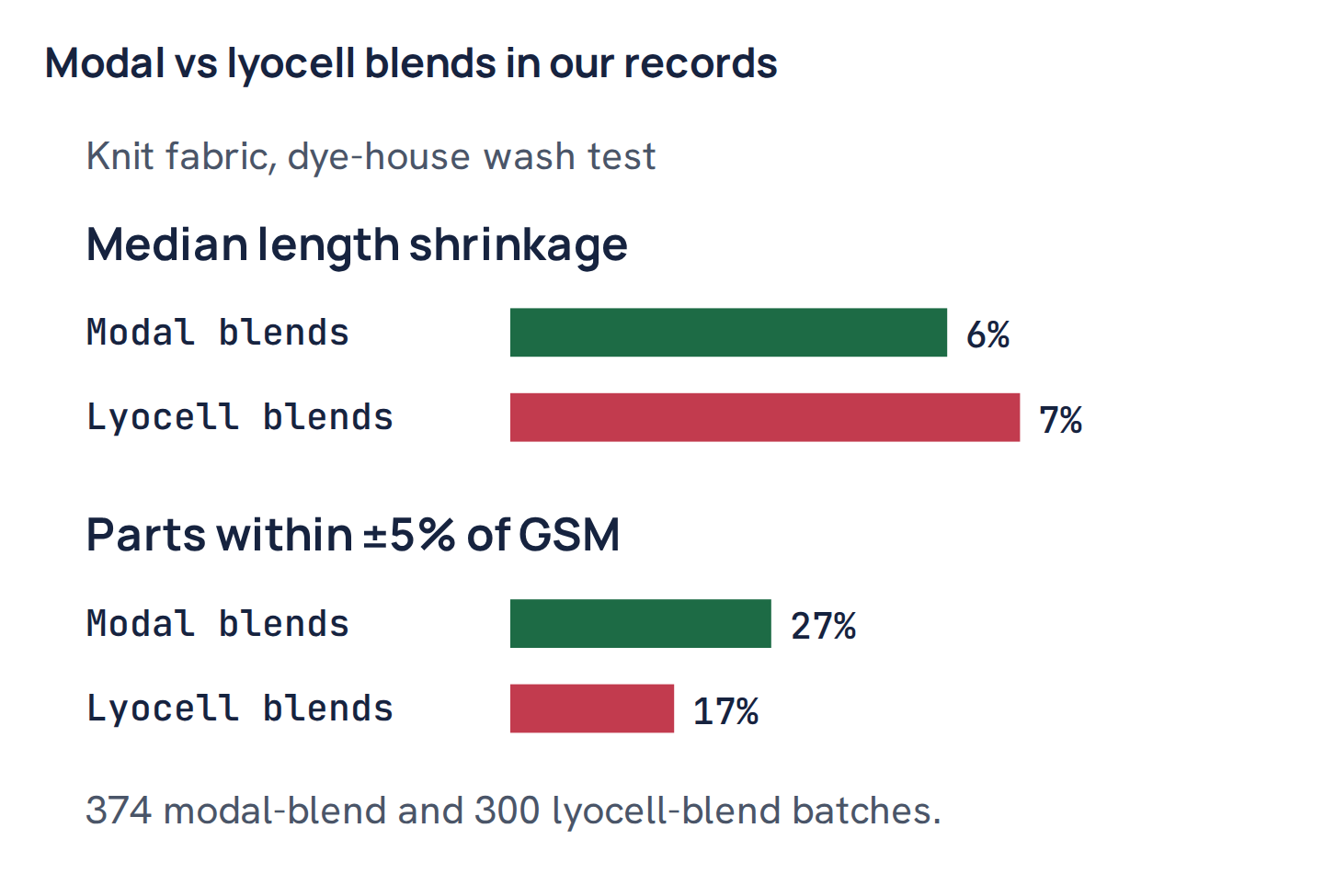
In knit finishing, the two fibres behave differently. In our records, modal-blend knits (374 batches) had a median length shrinkage of 6% after the wash test, the same as cotton, and 27% of parts were finished within ±5% of the required GSM. Lyocell-blend knits (300 batches) had a median length shrinkage of 7%, the worst tenth at 12% or more, only 32% of parts within 5% shrinkage, and only 17% within ±5% of the required GSM. Lyocell parts typically came out light, a median 8.7% under the required weight before washing. In other words, modal knits were easier to finish to specification.
Cotton-lyocell fabric is very loose and shrinks a lot, so it goes heavy as soon as it is washed. You cannot really control that in finishing. What helps is heat setting the fabric before dyeing starts. That brings it under some control.
Feel and comfort
Modal has a soft, buttery, slightly fuller hand that makes it a favourite for underwear, loungewear and T-shirts. Lyocell feels cooler and silkier, with a liquid drape that suits shirts, dresses and sheets. Both absorb moisture well and feel cool against the skin. Hot sleepers often like lyocell sheets; people who want very soft everyday underwear often choose modal or micro modal. See modal vs micro modal.
Strength and durability
Lyocell is one of the strongest cellulose fibres, dry and wet, so lyocell wovens are durable and can be blended into denim and workwear. Modal is strong enough for everyday knits and keeps its shape and softness well. Lyocell’s weakness is fibrillation: when wet fibres are rubbed, fine fibrils split off the surface, creating a peach-skin effect or, if uncontrolled, white streaks on dark colours. Modal fibrillates very little.
Breathability and moisture
Both fibres take up similar amounts of moisture and breathe well. In everyday comfort the difference is small. Lyocell is often marketed for moisture management in bedding, and modal for comfort in underwear, but both handle sweat better than cotton and much better than polyester.
Dyeing
Both take reactive dyes and give bright, rich shades. Lyocell needs extra care against fibrillation and crease marks during wet processing, often with enzyme treatments to clean the surface. Modal dyes very evenly and stays soft. See the 100% lyocell dyeing process and the 100% modal dyeing process.
For cotton-modal, lyocell, viscose and modal, the salt goes in at 80°C and the bath is cooled to 60°C for the soda.
Sustainability
Lyocell’s direct solvent process with high solvent recovery is generally considered cleaner than the viscose route, which is why lyocell is often promoted as a more sustainable fibre. Modal’s impact depends on how well carbon disulphide and caustic soda are recovered; integrated, well-run modal plants recover much of them. Both can use certified wood, and both are biodegradable when not blended with synthetics.
Common mistake: treating a dark lyocell shirt like a cotton one: hot wash, full load with towels, then tumble dry. Rubbing while wet raises fibrils that look like a white haze, and heat adds shrinkage. Wash lyocell inside out, cool and gentle, and dry it on low or hanging.
Cost
Both cost more than cotton and standard viscose. Lyocell is often slightly more expensive because of the solvent process and the extra care needed in finishing. Branded versions of both fibres carry a premium.
Which should you choose?
- Choose modal for underwear, T-shirts, loungewear and knit sheets that you want soft, stable and easy to wash.
- Choose lyocell for shirts, dresses, woven sheets and denim where silky drape, coolness and strength matter.
- Choose blends such as cotton-modal or cotton-lyocell to combine comfort with cotton’s structure.
Care for both
- Wash at 30°C on a gentle cycle, inside out.
- Avoid overloading the machine; friction causes lyocell fibrillation.
- Use mild liquid detergent and little or no softener.
- Line dry or tumble on low.
- Iron lyocell on medium while slightly damp; modal knits rarely need ironing.
Worked example. A brand chooses fibres for a sleepwear range. For the knit pyjama tops, modal-spandex jersey gives a soft, stable fabric that finishes close to target weight. For the woven sheet set, lyocell sateen gives a cool, silky surface that hot sleepers prefer. Each fibre is used where it performs best.
Modal vs lyocell for underwear
Modal, especially micro modal, dominates soft underwear because it stays soft, keeps its shape and fibrillates very little. Lyocell underwear exists and feels cool and smooth, but its tendency to fibrillate under rubbing makes it less common in close-fitting knits that are washed constantly. For underwear, modal is the more practical choice. See is modal good for underwear.
Modal vs lyocell for sheets
Both make excellent sheets for warm sleepers. Lyocell sateen sheets are smooth, cool and silky, with a slight sheen, and lyocell’s strength makes them durable if washed gently. Modal sheets, often knitted jersey, are very soft and stretchy, a little warmer, and very comfortable. If you prefer a crisp, cool woven sheet, lyocell suits; if you prefer a soft, T-shirt-like sheet, modal suits.
Blends with cotton
Cotton-modal and cotton-lyocell blends are common in T-shirts and shirts. Cotton-modal gives a softer, smoother cotton tee that keeps its shape; cotton-lyocell adds drape and coolness and is common in shirts and denim. In our experience lyocell blends are harder to stabilise in knits than modal blends, so cotton-lyocell knits need careful finishing. See what is cotton modal.
How to tell them apart
By feel alone it is difficult. Lyocell usually feels cooler and has a subtle sheen and fluid drape; modal feels softer and slightly warmer. The fibre content label is the reliable guide, and a lab test can confirm the fibre if needed.
Summary
- Both are wood-based regenerated cellulose fibres.
- Modal is softer and more stable in knits; lyocell is stronger, cooler and silkier.
- In our records modal blends shrank a median 6% and lyocell blends 7%.
- Lyocell can fibrillate; modal fibrillates very little.
- Lyocell’s closed-loop process is often seen as cleaner.
Questions
What is the difference between modal and lyocell?
Both are made from wood pulp. Modal uses a modified viscose process; lyocell dissolves pulp in a recovered solvent. Modal is softer and more stable in knits; lyocell is stronger and silkier.
Is lyocell better than modal?
Lyocell is stronger and often seen as cleaner to produce; modal is softer, more stable in knits and fibrillates less. The better choice depends on use.
Which is softer, modal or lyocell?
Modal usually feels softer and more buttery; lyocell feels cooler and silkier.
Does lyocell shrink more than modal?
In our knit records lyocell blends shrank a median 7% in length against 6% for modal blends, with a wider spread.
Is modal or lyocell more sustainable?
Lyocell’s closed-loop solvent process is generally considered cleaner; modal’s impact depends on chemical recovery at the plant.

Textile engineer with 14+ years in dyeing and fabric development. He writes every guide on Dyeing Solution from real production work. Full profile