Modal is very breathable: it absorbs more moisture than cotton, about 11 to 12% against 8%, and feels cool and smooth on the skin. Modal vs cotton, polyester and other fibres, which modal fabrics breathe best, sweat, hot weather, bedding and what our records show about modal blends.
At a glance
~11–12%moisture regain
Coolerthan cotton
+14.6%weight after wash
Noheavy softener
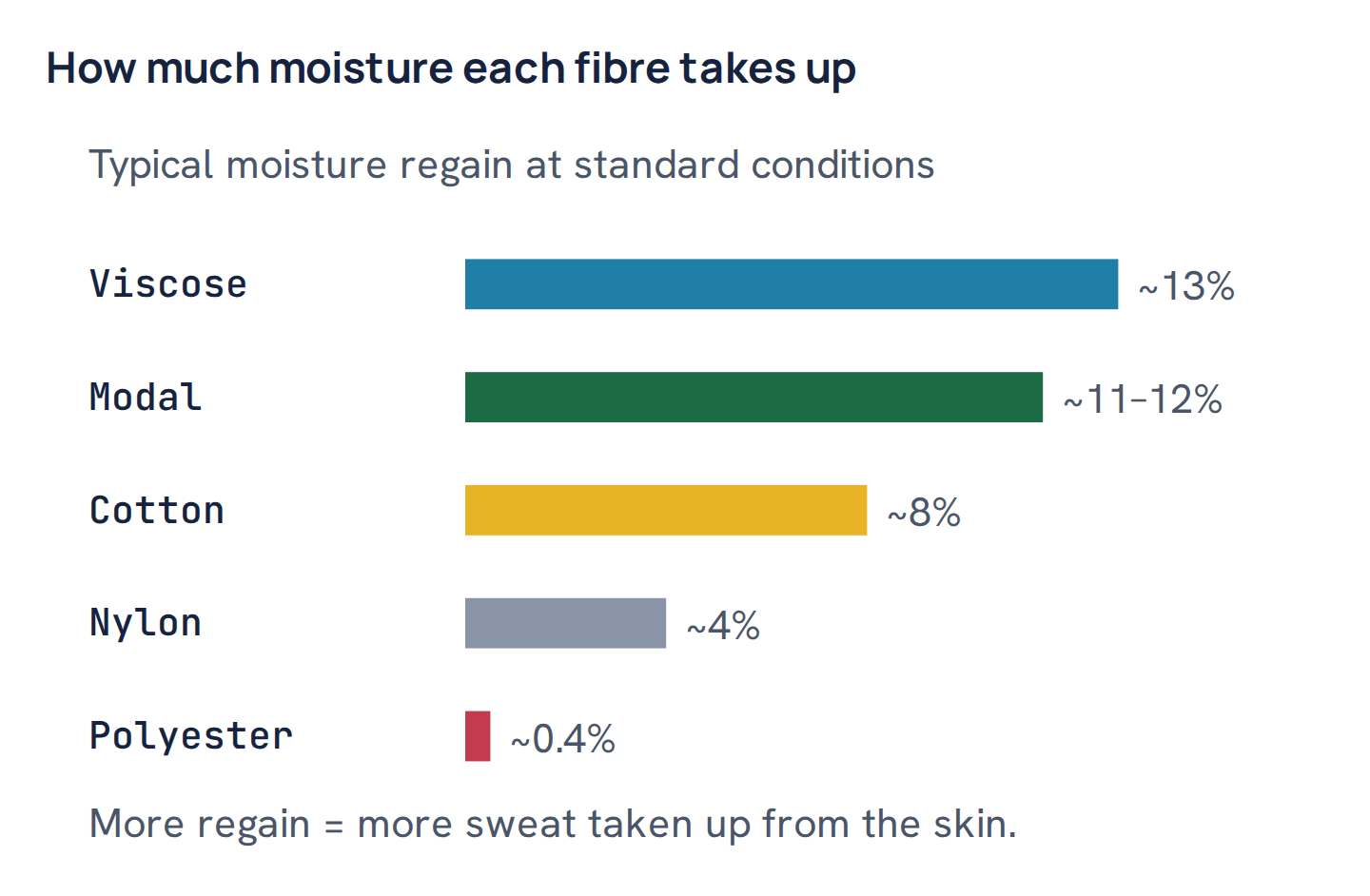
Yes, modal is very breathable. Modal is a cellulose fibre made from beech wood pulp, and like cotton it absorbs moisture and lets air and water vapour pass. It actually absorbs more moisture than cotton, around 11–12% at standard conditions against about 8% for cotton, and it feels cool, smooth and soft against the skin. That is why modal is popular for underwear, T-shirts, sleepwear and bedding. Modal’s breathability does depend on the fabric: a thin modal jersey breathes beautifully, while a dense modal-spandex knit holds more warmth.
This guide explains why modal is breathable, how it compares with cotton, polyester, viscose and lyocell, which modal fabrics breathe best, how modal handles sweat and heat, what our finishing records show about modal blends, and how to care for modal so it stays soft and breathable. It is written from the dye-house floor, where modal and cotton-modal knits are a regular part of what we dye and finish.
Why modal breathes well
- Cellulose fibre: modal is regenerated cellulose, the same basic chemistry as cotton, so it attracts and holds water.
- High moisture regain: it absorbs sweat vapour from the skin and releases it to the air.
- Fine, smooth fibres: modal is usually spun from fine fibres into smooth yarns, giving light, airy fabrics.
- Cool touch: the smooth surface and moisture uptake make modal feel cool on the skin.
Modal vs other fibres for breathability
| Fibre | Breathability | Feel in heat | Notes |
|---|---|---|---|
| Modal | High | Cool, smooth | Soft, stays soft after washing |
| Cotton | High | Comfortable, can feel damp | Holds sweat longer |
| Viscose | High | Cool, drapey | Weak when wet, shrinks more |
| Lyocell | High | Cool, silky | Strong, can fibrillate |
| Linen | Very high | Very cool, crisp | Creases easily |
| Polyester | Low to high (depends on structure) | Can feel clammy | Good for wicking sportswear |
See modal vs cotton and modal vs polyester.
Is modal more breathable than cotton?
In practice, modal and cotton are both highly breathable; modal often feels cooler and drier because it absorbs more moisture and its smooth fibres sit lightly on the skin. Cotton can feel slightly warmer and, in heavy sweating, stays damp longer. For hot sleepers and summer underwear, many people prefer modal or a cotton-modal blend. For heavy, structured garments, cotton is more common because it holds shape better.
Which modal fabrics breathe best
- Lightweight modal jersey: T-shirts and sleepwear; very breathable.
- Micro modal: finer fibres make thinner, lighter fabrics with excellent breathability. See modal vs micro modal.
- Cotton-modal blends: breathable and slightly more structured.
- Modal-spandex (underwear, fitted tops): still breathable, but closer fit and more spandex hold more warmth.
- Heavy modal rib or fleece: warmer, less airy.
Modal and sweat
Modal absorbs sweat well and releases it at a good rate, so light sweating is handled comfortably. Under heavy exercise, modal, like cotton, eventually saturates and dries more slowly than a technical polyester knit. For gym and running wear, polyester or nylon wicking fabrics dry faster; for everyday wear, sleep and underwear, modal is more comfortable.
What our records show about modal blends
Modal’s affinity for water also shows in finishing. In our records of 374 modal-blend knit batches, the median length shrinkage after the wash test was 6%, the same as 100% cotton, but light parts gained a median 14.6% in weight after washing as the fabric relaxed and closed up, and only 27% of parts were finished within ±5% of the required GSM, against 47% for cotton. Of modal-blend parts, 89% were heat set to bring this under control. A modal fabric that comes out heavier and denser after washing breathes slightly less than it did in the shop, which is one reason good finishing matters. See the cotton-modal dyeing process.
For cotton-modal, lyocell, viscose and modal, the salt goes in at 80°C and the bath is cooled to 60°C for the soda.
Common mistake: using lots of fabric softener on modal underwear and T-shirts to keep them soft. Modal is already soft, and softener coats the fibres, reducing their ability to absorb sweat. Use little or no softener on modal.
Is modal good for hot weather?
Yes. Lightweight modal tees, dresses and sleepwear feel cool and drape away from the body, and they handle everyday sweat well. Choose loose fits and thin jerseys for the hottest days. Avoid heavy modal-spandex knits in high heat if you prefer airiness over a fitted look.
Is modal good for bedding?
Modal and modal-blend sheets feel smooth, cool and soft, and they absorb night sweat, which suits warm sleepers. They are usually knitted (jersey sheets) or woven into a smooth sateen. They need gentle washing and low drying to stay soft and keep their size.
How to keep modal breathable and soft
- Wash at 30°C on a gentle cycle, inside out.
- Use mild liquid detergent; avoid bleach.
- Use little or no fabric softener.
- Line dry or tumble on low; avoid high heat.
- Store folded to avoid stretching.
Worked example. A customer compares a 100% cotton jersey tee and a 50/50 cotton-modal tee of similar weight on a hot day. The cotton tee feels comfortable but damp at the back after a long walk; the cotton-modal tee feels cooler and drier and keeps its soft hand after many washes. Both breathe well, but the modal blend handles moisture a little better.
Modal underwear and breathability
Underwear is where modal’s breathability matters most. A modal-spandex brief or boxer absorbs moisture from the skin, feels cool and smooth, and stays soft after many washes, which is why it is widely used for everyday underwear. Most modal underwear contains 5–10% spandex for fit; that small amount does not stop the fabric breathing. For the best airflow, look for lighter fabrics, a breathable cotton or modal gusset and a fit that is snug but not tight. See is modal good for underwear.
Modal vs bamboo viscose for breathability
Bamboo viscose and modal are both regenerated cellulose fibres and both breathe well. Viscose absorbs slightly more moisture, but it is weaker when wet and shrinks more; modal has higher wet strength, keeps its shape better and stays softer through washing. In terms of how cool and breathable they feel, the difference is small; the bigger differences are durability and shrinkage. See bamboo rayon vs viscose.
Modal and odour
Because modal absorbs sweat into the fibre rather than leaving it on the surface, it tends to hold less body odour than polyester, which attracts oily sweat compounds. Modal garments usually come out of a normal 30–40°C wash fresh. Heavy sweating in a dense modal-spandex fabric can still leave smells if the garment is not washed regularly.
How fabric weight changes breathability
Fibre sets the starting point, but fabric weight and structure decide how breathable a garment really feels. A 140 GSM modal jersey lets air through easily; a 260 GSM modal rib or interlock is warmer because it is thicker and denser. If you want maximum airflow, check the weight on the product page or feel how thin the fabric is between your fingers. See what is GSM in fabric.
Modal blends: what the other fibre changes
- Cotton-modal: breathable and absorbent, with more structure than pure modal. See what is cotton modal.
- Modal-spandex: breathable with stretch; warmer in heavy weights.
- Modal-polyester: faster drying and more durable, but less absorbent.
- Modal-silk or modal-cashmere: luxury blends with a soft, light feel.
The more modal in the blend, the more it behaves like modal: soft, cool and absorbent.
Does modal breathe as well after many washes?
Yes, if it is washed gently. Modal resists the hardening that cotton can suffer in hard water, so it keeps its soft, open hand. Hot washes and high dryer heat can make modal fabric shrink and close up slightly, which reduces airflow, so cool washing and low drying keep it performing as it did when new. Avoid heavy detergent doses, which can leave residue in the fibres.
Summary
- Modal is very breathable and absorbs more moisture than cotton.
- It feels cool, smooth and soft, ideal for underwear, sleepwear and summer tops.
- Light, fine modal jerseys breathe best; dense modal-spandex holds more warmth.
- For heavy exercise, technical polyester dries faster.
- Wash cool and skip softener to keep modal breathable.
Questions
Is modal breathable?
Yes. Modal is a cellulose fibre that absorbs moisture and lets air and vapour pass, so it feels cool and breathable.
Is modal more breathable than cotton?
Both are highly breathable; modal absorbs more moisture and often feels cooler and drier.
Is modal good for hot weather?
Yes. Lightweight modal tops, dresses and sleepwear feel cool and handle everyday sweat well.
Does modal make you sweat?
No more than cotton. Modal absorbs sweat well, though it dries slower than technical polyester during heavy exercise.
Is modal good for sleepwear?
Yes. Modal is soft, smooth, cool and absorbent, which suits warm sleepers.

Textile engineer with 14+ years in dyeing and fabric development. He writes every guide on Dyeing Solution from real production work. Full profile