Acrylic fabric is a synthetic made from acrylic fibre, at least 85% acrylonitrile from petroleum and natural gas, developed as a cheap, easy-care wool alternative. How it is made, properties, pros and cons, uses, comparisons, modacrylic, dyeing, safety and care.
At a glance
85%+acrylonitrile
1–2%moisture regain
Brightcationic dyes
Noheat
Acrylic fabric is a synthetic fabric made from acrylic fibre, a polymer that is at least 85% acrylonitrile, which is derived from petroleum and natural gas. It was developed as a cheaper, easy-care alternative to wool: it is soft, light, warm, holds very bright colours, dries fairly fast, resists moths and sunlight, and can be machine washed. Its weaknesses are that it pills easily, builds static, does not breathe or absorb sweat like natural fibres, can be damaged by heat, and melts when it burns. Acrylic is mostly used for sweaters, hats, scarves, socks, blankets, fleece and outdoor furnishings.
This guide explains what acrylic is made of and how it is made, its properties, pros and cons, common uses, acrylic vs wool, cotton and polyester, modacrylic, how acrylic is dyed, safety and environmental questions, and how to care for acrylic. It is written from the dye-house side, where we dye acrylic and cotton-acrylic knits with cationic dyes.
What acrylic is made of
Acrylic fibre is made mainly from acrylonitrile, a chemical produced from propylene (from petroleum refining) and ammonia. Acrylonitrile is polymerised, usually with small amounts of other monomers (comonomers) such as methyl acrylate or vinyl acetate, which make the fibre softer and easier to dye. To be called acrylic, the fibre must contain at least 85% acrylonitrile units. Fibres with 35–85% acrylonitrile are called modacrylic.
How acrylic fibre is made
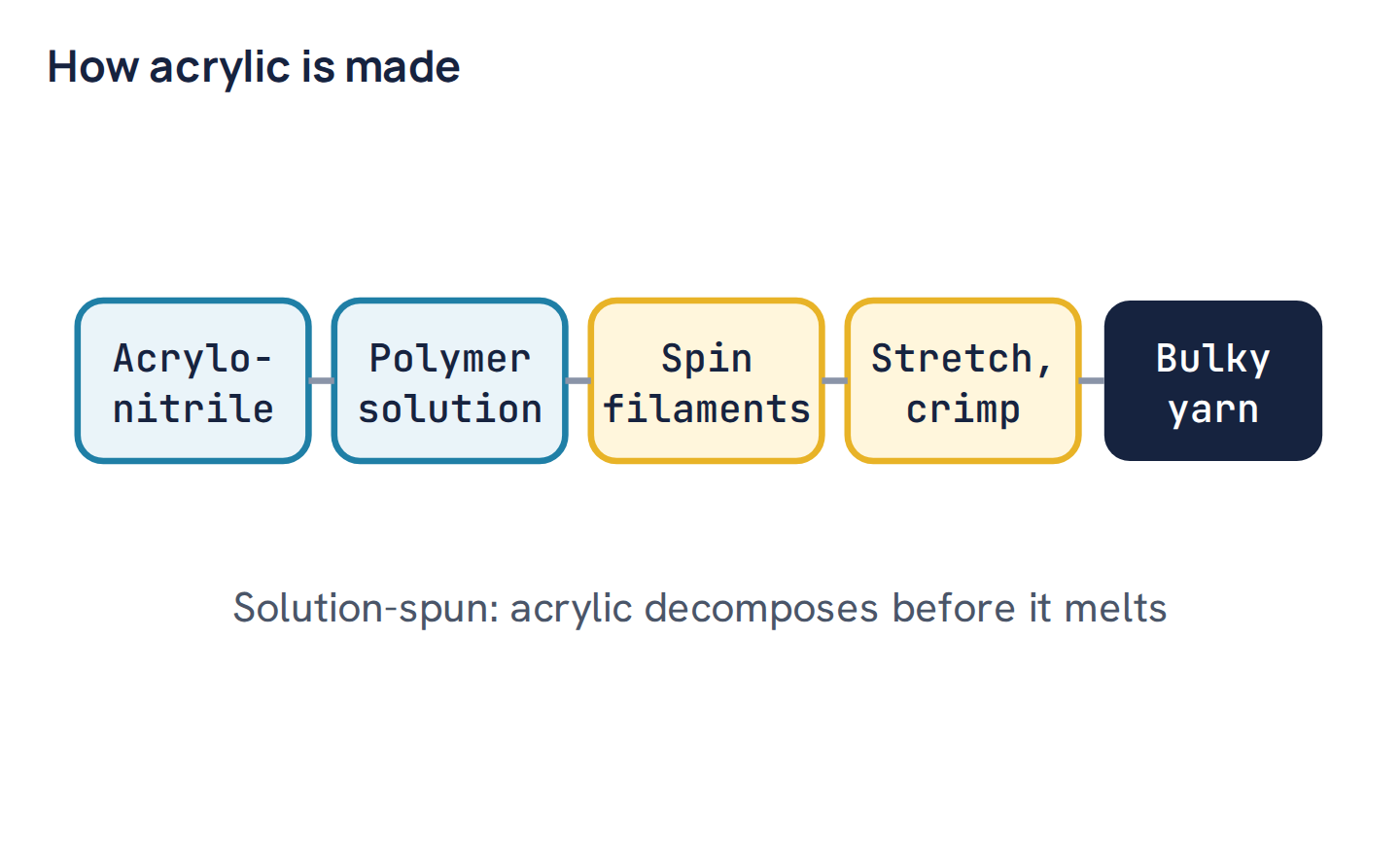
- Acrylonitrile and comonomers are polymerised into polyacrylonitrile.
- The polymer is dissolved in a solvent to make a thick spinning solution, because it decomposes before it melts.
- The solution is pushed through spinnerets into a coagulating bath (wet spinning) or into warm air that evaporates the solvent (dry spinning), forming filaments.
- The filaments are washed, stretched, crimped and dried.
- Most are cut into staple fibre and spun into yarn, often “high-bulk” yarn that is lofty and woolly.
Properties of acrylic
| Property | Acrylic |
|---|---|
| Feel | Soft, warm, woolly, lofty |
| Weight | Light for its warmth |
| Moisture regain | About 1–2% |
| Strength | Moderate |
| Abrasion resistance | Fair; pills easily |
| Sunlight resistance | Excellent |
| Moth and mildew resistance | Very good |
| Heat sensitivity | High; softens and can be permanently distorted |
| Colour | Very bright, clear colours |
| Static | Builds static easily |
Pros and cons
Pros: low cost, wool-like warmth and softness, light weight, very bright and fade-resistant colours, machine washable, quick drying, moth resistant, excellent outdoor sunlight resistance.
Cons: pills easily, builds static, less breathable and absorbent, can feel clammy, holds odour, sensitive to heat (dryer and iron), melts and burns readily, made from fossil fuels and sheds microfibres.
Common uses of acrylic
- Sweaters, cardigans, hats, scarves and gloves.
- Socks, often blended with nylon or cotton.
- Blankets, throws and faux fur.
- Fleece and sweatshirts, often blended with cotton.
- Outdoor awnings, boat covers and furniture fabrics (solution-dyed acrylic).
- Craft yarn for knitting and crochet.
Acrylic vs wool, cotton and polyester
| Point | Acrylic | Wool | Cotton | Polyester |
|---|---|---|---|---|
| Warmth | High when dry | High, even damp | Low to medium | High in fleece |
| Breathability | Medium | Excellent | High | Low to high |
| Pilling | High | Medium | Low | High in spun |
| Care | Machine, cool, no heat | Gentle | Easy | Very easy |
| Cost | Low | High | Low | Low |
See why is my sweater pilling.
Modacrylic
Modacrylic is a related fibre with 35–85% acrylonitrile, often combined with vinyl chloride or vinylidene chloride. It is inherently flame resistant: it self-extinguishes and does not drip like ordinary acrylic. That makes it valuable for protective clothing, children’s sleepwear in some markets, wigs, faux fur and furnishings.
How acrylic is dyed
Acrylic is dyed with cationic (basic) dyes, which are positively charged and bond ionically to negatively charged groups introduced into the fibre by the comonomers. The result is exceptionally bright, clear colours with good light fastness. Acrylic takes dye very quickly once heated above its softening point, roughly 75–85°C in water, so temperature is raised slowly through that zone and retarding agents are used to dye evenly. Cooling is also slow, to avoid setting creases. Outdoor acrylic is often solution dyed, with pigment added before spinning, for maximum fade resistance. See how cationic dyes work on acrylic and the cotton-acrylic dyeing process.
Common mistake: raising the dye bath temperature quickly on an acrylic order to save time. Once the fibre passes its softening point it takes dye almost instantly, so fast heating causes patchy, unlevel shades that are very hard to correct. Acrylic needs a slow, controlled rise and a retarder.
Is acrylic fabric safe?
Acrylic is considered safe to wear. Concerns relate to residual acrylonitrile from manufacturing, which is regulated and largely removed in processing, to dyes and finishes on poorly processed products, and to fire, since acrylic burns and melts. Washing new garments before wearing removes loose residues. See are fabric dyes safe.
Environment
Acrylic is fossil-based, energy-intensive to make, rarely recycled and sheds microfibres in washing. Its long sun resistance makes it durable outdoors. Choosing well-made acrylic that lasts, washing full loads cool and using a microfibre filter reduce its impact.
How to care for acrylic
- Wash at 30°C on a gentle cycle, inside out.
- Use a mesh bag for knitwear.
- Dry flat; avoid tumble drying or use no heat.
- Do not iron, or use the lowest setting with a cloth.
- Reduce static with conditioner on non-technical items.
Worked example. A knitwear buyer compares an acrylic and a wool sweater at very different prices. The acrylic is warm, soft and brightly coloured and machine washes well, but pills after a month of daily wear. The wool costs more, needs a wool wash, but still looks good after a season. For a children’s school jumper, acrylic’s price and washability win; for a long-lasting adult sweater, wool does.
Acrylic in outdoor fabrics
Solution-dyed acrylic is one of the best fibres for awnings, boat covers, umbrellas and outdoor cushions. Pigment is added to the spinning solution, so the colour runs through the whole fibre and resists fading in years of strong sun. Acrylic also resists mildew and does not rot. These fabrics are usually given water-repellent and stain-resistant finishes. Their weak points are abrasion and heat; they should not be dried near heaters or barbecues.
Acrylic yarn for knitting and crochet
Acrylic is the most widely sold hand-knitting yarn because it is cheap, comes in every colour, is machine washable and is safe for people who react to wool. Better acrylic yarns are smooth, soft and pill-resistant; very cheap ones can feel squeaky and pill quickly. Knitters can “kill” acrylic with steam to make it drape, but this is permanent, so test on a swatch first.
Acrylic blends
- Acrylic-wool: wool warmth and feel at lower cost; needs gentle washing.
- Cotton-acrylic: softer, more absorbent knitwear and fleece.
- Acrylic-nylon: stronger socks and hats.
- Acrylic-polyester: very easy-care knitwear and blankets.
How to identify acrylic
- Label: look for acrylic, or PAN on some technical labels.
- Feel: soft, warm, light and slightly “dry” or squeaky.
- Static: crackles when pulled off over the head in dry weather.
- Burn test on a thread: burns readily with a sooty flame and melts into a hard bead; do this only safely.
Does acrylic shrink?
Acrylic barely shrinks in a cool wash because it absorbs little water and cannot felt, but heat softens it, so a hot dryer can shrink, stretch or flatten acrylic permanently. Dry it flat. See does fabric shrink after washing.
Is acrylic warm?
Yes. Acrylic’s crimped, bulky yarns trap a lot of still air, so acrylic knitwear is warm for its weight, close to wool when dry. It loses warmth when damp because it does not manage moisture like wool, so for wet outdoor conditions wool or polyester fleece is better.
Faux fur and acrylic
Most faux fur is made from acrylic or modacrylic pile on a knitted backing. Acrylic gives softness, loft and bright or natural-looking colours; modacrylic adds flame resistance and a more fur-like texture. Brush faux fur gently and keep it away from heat, which can melt or frizz the pile.
Summary
- Acrylic is a synthetic fibre made mostly from acrylonitrile.
- It is soft, warm, light, bright and cheap, made to imitate wool.
- It pills, builds static, breathes less and is heat sensitive.
- It is dyed with cationic dyes for very bright colours.
- Wash cool, dry flat and keep it away from heat.
Questions
What is acrylic fabric made of?
Acrylic fibre, a synthetic polymer that is at least 85% acrylonitrile, made from petroleum and natural gas chemicals.
Is acrylic a good fabric?
It is warm, soft, light, colourful and cheap, but it pills, builds static and breathes less than natural fibres.
Is acrylic like wool?
Acrylic was designed to imitate wool’s softness and warmth, but it does not breathe, regulate moisture or resist odour like wool.
Is acrylic fabric safe?
Yes, it is considered safe to wear. Wash new garments before wearing and keep acrylic away from flames.
What is modacrylic?
A related fibre with 35 to 85% acrylonitrile that is inherently flame resistant.

Textile engineer with 14+ years in dyeing and fabric development. He writes every guide on Dyeing Solution from real production work. Full profile