Nylon is not considered toxic to wear: the finished polyamide fibre is stable and inert. The real questions are about dyes and finishes, comfort in heat, fire behaviour and microplastics. Nylon vs polyester and cotton, skin comfort, and how to reduce any risk.
At a glance
Inertpolyamide fibre
~4%moisture regain
Meltsin flame
Washbefore wearing
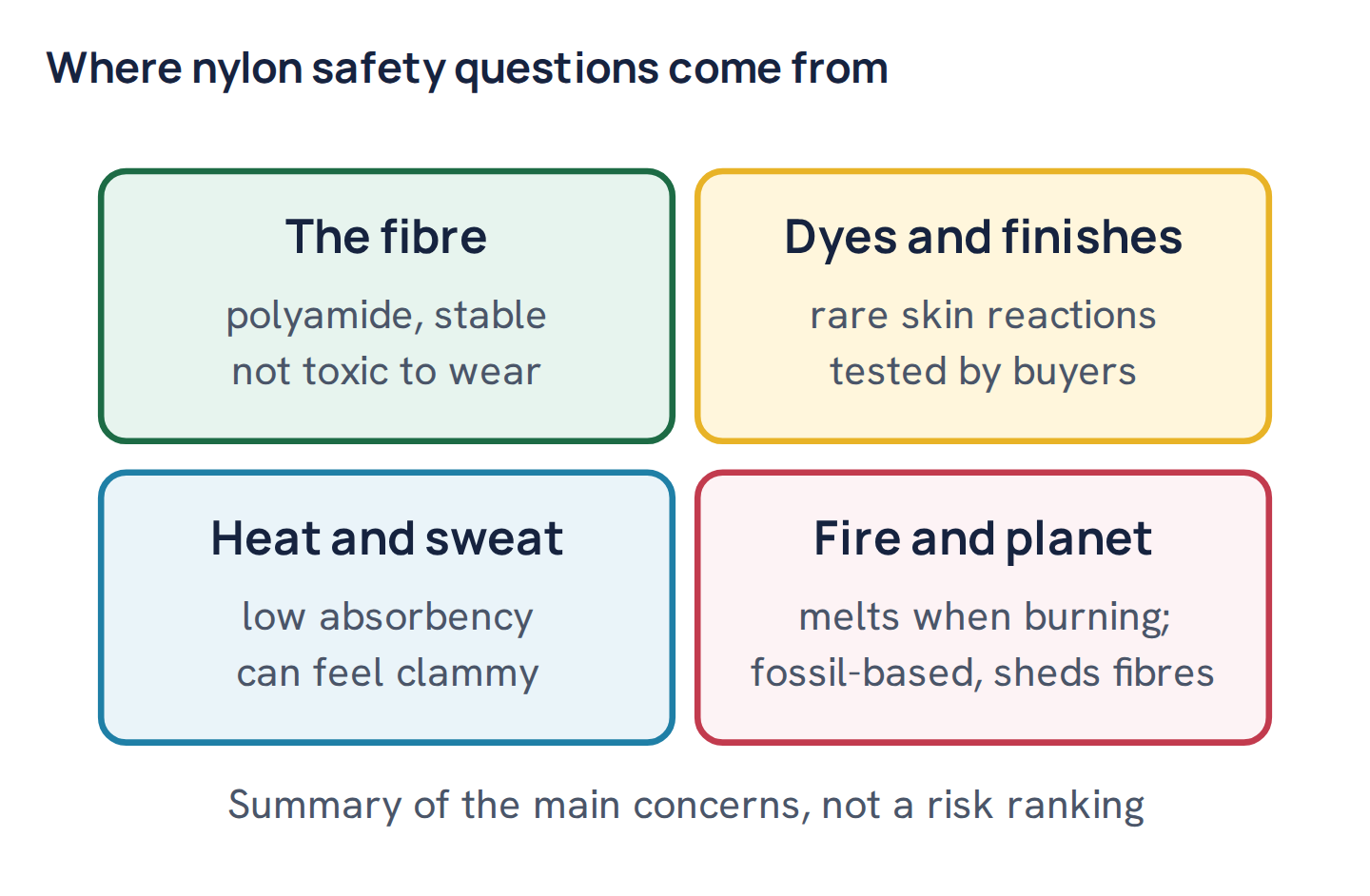
Nylon is not considered toxic to wear for most people. Finished nylon fibre (polyamide) is a stable, inert plastic that does not release harmful amounts of chemicals onto the skin in normal use, and it is widely used in underwear, tights, swimwear, activewear and medical textiles. The real questions about nylon safety are not about the fibre itself but about what is added to it, how it feels in heat, and its environmental footprint: some dyes and finishes can irritate sensitive skin, nylon does not absorb sweat well, it melts when it burns, and it sheds microfibres and is made from fossil fuels.
This guide explains what nylon is, why the finished fibre is considered safe, where genuine concerns come from, how nylon compares with polyester and cotton for skin comfort, what to look for on labels, how to reduce any risk from new clothes, and the environmental side. It is written from the dye-house side, where we dye nylon and nylon-elastane fabrics with acid dyes and test finished fabrics for restricted chemicals.
What is nylon?
Nylon is a family of synthetic polymers called polyamides. The two main types in clothing are nylon 6 and nylon 6,6. They are made from chemicals derived from petroleum, polymerised into long chains, melted and spun into filaments. Nylon is strong, elastic, abrasion resistant, light and quick drying. It is dyed with acid dyes, which bond to amine groups in the fibre and give bright, deep colours. See how acid dyes work on nylon.
Why finished nylon is considered safe
- Inert polymer: once polymerised and spun, nylon is chemically stable and does not break down on the skin.
- Monomers are removed: starting chemicals such as caprolactam are mostly converted to polymer, and residues are reduced during manufacturing and wet processing.
- Washed in processing: fabrics are scoured, dyed, rinsed and finished, which removes much of the loose residue.
- Long history of use: nylon has been used in hosiery and underwear for decades, and in surgical sutures and medical meshes.
Dyes and finishes: the real chemistry question
Nylon is dyed with acid dyes, and some nylon garments also carry finishes such as softeners, antimicrobials, wicking or water-repellent treatments. A small number of people react to specific dyes or finishing chemicals, usually as contact dermatitis where the fabric is tight against the skin. Disperse dyes, used on polyester and sometimes on nylon blends, are the class most often linked to textile dye allergy. Responsible brands restrict harmful substances using chemical lists and test fabrics for things such as banned azo amines, formaldehyde and extractable heavy metals. See are fabric dyes safe.
Is nylon bad for your skin?
For most people, no. Nylon is smooth and soft and is used in close-fitting garments because it does not scratch. The common complaints are about comfort rather than toxicity: nylon absorbs only about 4% moisture, so in heat, tight nylon can hold sweat against the skin and feel warm and clammy. That warm, damp environment can contribute to chafing or irritation, especially in underwear and tight leggings. Choosing breathable knits, a cotton gusset, or a wicking finish helps. See is nylon water resistant for how nylon handles moisture.
Nylon vs polyester vs cotton for safety and comfort
| Point | Nylon | Polyester | Cotton |
|---|---|---|---|
| Fibre toxicity in wear | Not considered toxic | Not considered toxic | Not considered toxic |
| Moisture absorption | Low (~4%) | Very low (~0.4%) | High (~8%) |
| Feel in heat | Can feel clammy | Can feel clammy | Absorbs sweat |
| Dye class | Acid dyes | Disperse dyes | Reactive dyes |
| In fire | Melts and drips | Melts and drips | Burns, no melt |
| Microfibre shedding | Yes | Yes | Yes, but biodegradable |
Nylon and fire safety
Nylon shrinks away from a small flame and then melts. Molten nylon drips and can stick to skin, which makes burns worse. That is why nylon and other synthetics are avoided for cooking aprons, welding and firefighting clothing unless they are specially treated or blended. For ordinary wear, the risk only matters near open flames. See is cotton flammable for how natural fibres compare.
Microplastics and environmental concerns
Nylon is made from fossil fuels, its production releases greenhouse gases (nylon 6,6 production can release nitrous oxide unless it is abated), and nylon garments shed microfibres in the wash. These are environmental concerns rather than direct risks from wearing the fabric. Recycled nylon, made from waste such as fishing nets and carpet fibres, reduces the need for new raw material. Washing full loads at lower temperatures, using a gentle cycle and a filter or wash bag reduces fibre shedding.
Nylon in medical and baby products
Nylon’s safety record is reflected in medical use: it is used for sutures, surgical meshes and compression garments. For babies, cotton or cotton-rich blends are usually chosen for comfort and absorbency rather than because nylon is unsafe. Baby products should carry recognised safety certifications and be washed before first use.
Common mistake: blaming the fibre when a new pair of nylon leggings causes itching. The cause is often a finish, a dye, a tight fit holding sweat, or simply not washing new garments before wearing. Wash new nylon clothes before the first wear and choose looser or more breathable styles if you react.
How to reduce any risk from new nylon clothes
- Wash new garments before wearing to remove loose dye and finishing residues.
- Choose products with independent chemical safety certification where possible.
- If you have sensitive skin, pick lighter colours and fewer special finishes.
- Prefer cotton gussets in nylon underwear and tights.
- Change out of sweaty nylon activewear promptly.
Is nylon safe for food and water contact?
Nylon is used in food-contact items such as kitchen utensils, packaging films and brush bristles, under food-contact regulations. Cheap nylon utensils left in very hot pans can soften and should be replaced if they melt or deform. For clothing, food contact is not a concern.
Worked example. A runner notices redness under the waistband of new nylon-spandex leggings. Washing them twice, choosing a looser waistband, and changing straight after training stop the problem. The fibre was not toxic; sweat trapped under a tight band and a fresh finish caused the irritation.
What about nylon tights and hosiery?
Nylon tights and stockings are worn directly against the skin for many hours and have a long safety record. Problems people report are usually comfort-related: sweaty feet, static cling, or irritation from tight waistbands. A cotton gusset improves comfort, and washing new tights before first wear removes loose finishing residues. People with a known dye allergy sometimes do better with lighter or nude shades, which use less dye.
Nylon swimwear and chlorine
Swimwear is usually nylon-spandex or polyester-spandex. Chlorine does not make nylon toxic, but it gradually weakens spandex and can fade some dyes, so swimsuits lose their stretch and colour over time. Rinse swimwear in fresh water after swimming, wash it cool without bleach, and dry it in the shade. Polyester-spandex holds up better than nylon-spandex in heavily chlorinated pools.
How nylon is tested before sale
Brands that sell into regulated markets usually require fabric tests before bulk approval. Typical checks include pH, formaldehyde, banned azo amines, extractable heavy metals and colour fastness to washing, rubbing and perspiration. Good fastness matters for safety as well as quality, because poorly fixed dye can transfer to the skin during sweating. In the dye house, nylon is dyed with acid dyes and often after-treated with a fixing agent to improve wash fastness. See colour fastness to perspiration and the 100% nylon dyeing process.
Nylon underwear and sensitive skin
For people with sensitive skin, the most comfortable choice is usually a breathable fabric, a looser fit and a cotton-lined gusset. Nylon underwear is smooth, thin and invisible under clothes, which many people like, but because it holds sweat it is less ideal for all-day wear in heat. Rotating between nylon and cotton or modal pairs is a practical approach.
Summary
- Nylon is not considered toxic to wear.
- Concerns come mainly from dyes, finishes, heat comfort, fire and environment.
- Nylon absorbs little sweat, so tight nylon can feel clammy.
- Nylon melts in fire; avoid it near open flames.
- Wash new nylon garments before wearing, and look for chemical safety certification.
Questions
Is nylon toxic to wear?
No. Finished nylon is a stable polymer and is not considered toxic to wear for most people.
Is nylon bad for your skin?
Not usually. Tight nylon can hold sweat and feel clammy, and rarely a dye or finish irritates sensitive skin.
Is nylon safer than polyester?
Both are considered safe to wear. Nylon absorbs a little more moisture; both melt in flame and shed microfibres.
Why does nylon make me itch?
Usually a finish, a dye, trapped sweat or a tight fit. Wash new garments first and choose looser or more breathable styles.
Is recycled nylon safe?
Yes. Recycled nylon is the same polymer as virgin nylon and is processed and tested in the same way.

Textile engineer with 14+ years in dyeing and fabric development. He writes every guide on Dyeing Solution from real production work. Full profile