Polyester and acrylic are both synthetics, but polyester is the strong, stable all-rounder and acrylic is a soft, warm wool imitator. Feel, warmth, breathability, durability, pilling, heat, dyeing, safety, environment, blends and which to choose for each use.
At a glance
Strongerpolyester
Woollieracrylic
3%polyester shrinkage
Heatacrylic risk
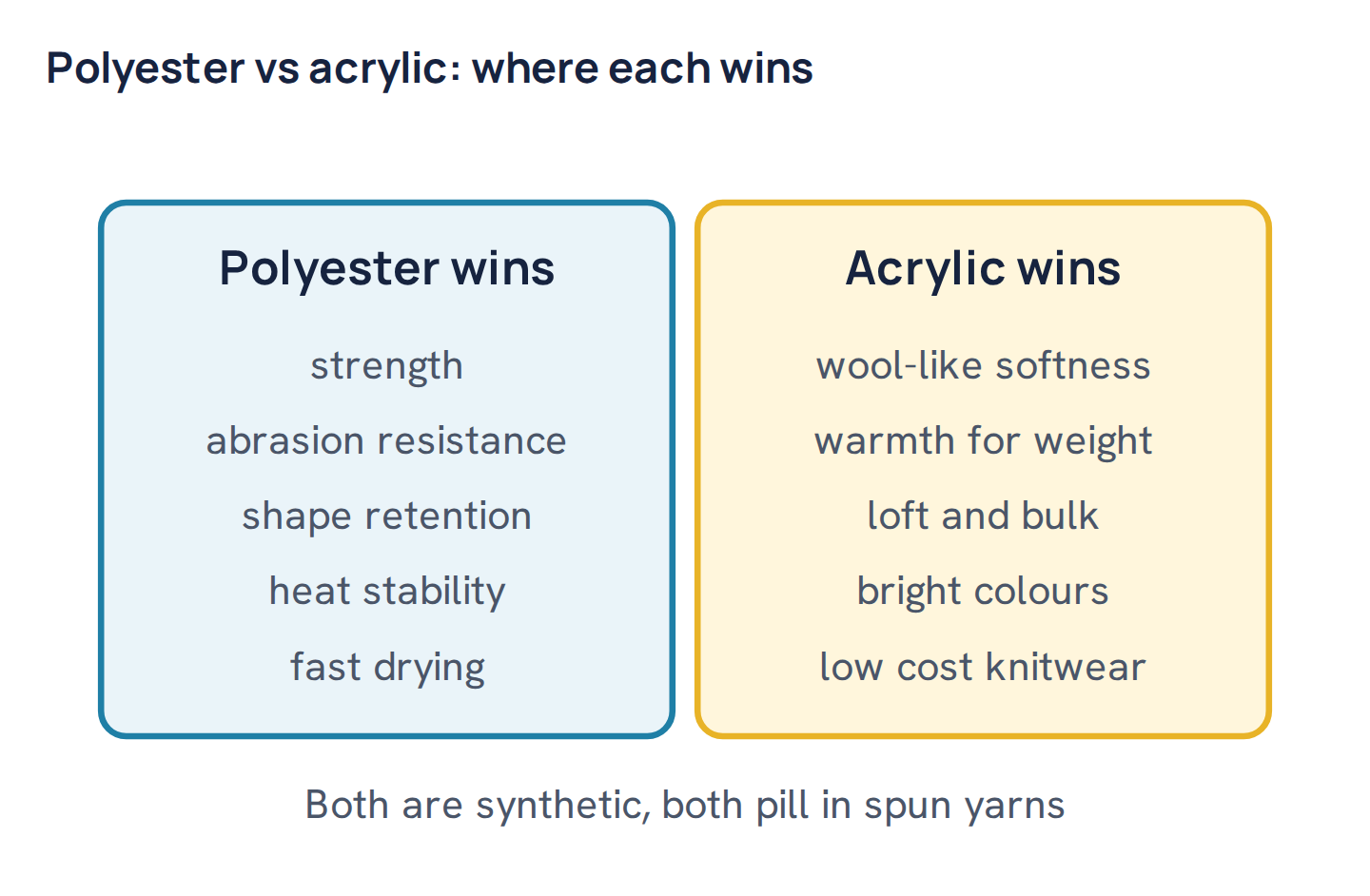
Polyester and acrylic are both synthetic fibres made from petroleum, but they are used for different jobs. Polyester is strong, smooth, very durable, low-absorbing and heat-stable, which makes it the world’s most used fibre for everything from T-shirts and sportswear to linings, fleece and outerwear. Acrylic is soft, light, warm and lofty, made to imitate wool, so it is used mainly for sweaters, beanies, scarves, socks and blankets. Polyester wins on strength, durability and shape retention; acrylic wins on warmth for weight, wool-like softness and bright colour, but it pills more and is more sensitive to heat.
This guide compares polyester and acrylic fibre by fibre: how each is made, feel, warmth, breathability, durability, pilling, shrinkage and heat, dyeing and colour, safety, environment, cost, and which to choose for sweaters, blankets, fleece and activewear. It is written from the dye-house side, where we dye polyester with disperse dyes and acrylic with cationic dyes, and finish both in blends.
How each fibre is made
Polyester (PET) is made by polymerising terephthalic acid and ethylene glycol, then melt-spinning the polymer into filaments. It is used as continuous filament for smooth fabrics, or cut into staple fibre for spun yarns. See polyester staple fibre.
Acrylic is made mainly from acrylonitrile (at least 85%), polymerised and then spun from a solution, usually by wet or dry spinning, because it degrades before it melts. Most acrylic is cut into staple and spun into soft, bulky, “high-bulk” yarns that mimic wool.
Polyester vs acrylic at a glance
| Point | Polyester | Acrylic |
|---|---|---|
| Made to imitate | Its own fibre; also silk and cotton looks | Wool |
| Feel | Smooth to soft, depends on fabric | Soft, warm, lofty, woolly |
| Strength | Very high | Moderate |
| Abrasion resistance | Very good | Fair |
| Moisture regain | ~0.4% | ~1–2% |
| Warmth for weight | Good in fleece and fill | Very good |
| Pilling | High in spun fabrics | High |
| Heat sensitivity | Moderate; heat-set and stable | High; can be “killed” by heat |
| Dye class | Disperse dyes | Cationic (basic) dyes |
| Typical uses | Tees, sportswear, fleece, linings, outerwear | Sweaters, hats, scarves, socks, blankets |
Feel and warmth
Acrylic’s high-bulk yarns trap a lot of still air, so acrylic knitwear feels warm and cosy for its weight, close to wool. Polyester can be just as warm when made into fleece, pile or insulation fill, but in ordinary knits and wovens it feels smoother and cooler. For a soft, chunky sweater look at a low price, acrylic is the usual choice; for a warm, durable jacket or blanket, polyester fleece is more common. See is polyester warm.
Breathability and moisture
Neither fibre absorbs much moisture, so both can feel clammy if you sweat heavily in a dense fabric. Acrylic absorbs slightly more than polyester and is used in socks because it wicks moisture along the fibre and dries reasonably fast. Technical polyester knits are better at moving sweat in sportswear. For breathable everyday wear, cotton, wool or cellulose fibres are more comfortable.
Durability and pilling
Polyester is much stronger and more abrasion resistant than acrylic, so polyester garments generally last longer and hold their shape. Both pill when spun from staple fibres, and in both the strong fibres keep pills attached. Acrylic knitwear usually pills sooner because its yarns are looser and loftier. Polyester filament fabrics pill very little. See does polyester pill.
Shrinkage and heat
Neither fibre shrinks much in water, but heat behaves differently. Polyester is heat set in the factory at high temperatures, so it is very stable in washing and drying; our records show a median length shrinkage of just 3% for polyester knits. Acrylic softens at much lower temperatures, so a hot wash or tumble dryer can shrink, stretch or flatten acrylic permanently. That makes polyester easier to care for.
Polyester has no shrink property. In a CVC or PC fabric the polyester holds the structure, so the fabric cannot shrink, and washing changes the GSM very little.
Dyeing and colour
Polyester is dyed with disperse dyes at around 130°C under pressure; it gives excellent wash fastness and a wide colour range. Acrylic is dyed with cationic dyes, which bond ionically to acid groups in the fibre and give exceptionally bright, clear, vivid colours with good light fastness. Acrylic must be heated slowly through its softening range in dyeing to avoid unevenness, and cooled slowly to avoid creases. See how disperse dyes work on polyester and how cationic dyes work on acrylic.
Safety and comfort
Both fibres are considered safe to wear. Acrylic can feel scratchy to some people in cheap, harsh yarns; polyester can feel clammy in dense fabrics. In fire, both melt; acrylic tends to burn more readily than polyester. Keep both away from open flames. See is polyester dangerous.
Environment
Both are fossil-fuel based and shed microfibres in washing. Polyester can be recycled from bottles and textile waste, and recycled polyester is widely available. Recycled acrylic exists but is much less common. Polyester’s longer life also helps its footprint per wear.
Common mistake: buying an acrylic sweater for hard everyday wear because it feels as soft as wool in the shop. Acrylic can pill and lose its shape quickly, especially if tumble dried. For heavy use, a polyester fleece or a wool or wool-blend knit holds up better.
Polyester-acrylic blends
Some knitwear, fleece and blankets blend polyester and acrylic to combine acrylic’s soft loft with polyester’s strength and stability. These blends need two dye classes, disperse for polyester and cationic for acrylic, if dyed as fabric. They are usually easy-care, warm and inexpensive, but still pill in spun yarns.
Which should you choose?
| Use | Better choice | Why |
|---|---|---|
| Chunky winter sweater (budget) | Acrylic or acrylic-wool | Wool-like warmth and softness |
| Fleece jacket | Polyester | Durable, warm, stable |
| Beanie or scarf | Acrylic | Soft, warm, bright colours |
| Sportswear | Polyester | Strong, wicking, quick drying |
| Socks | Acrylic or polyester blends with nylon | Soft, moisture handling, strength |
| Blanket | Polyester fleece or acrylic | Both warm; polyester more durable |
How to tell polyester from acrylic
- Label: the fibre content label is the reliable answer.
- Feel: acrylic knitwear feels woolly and lofty; polyester feels smoother or slicker.
- Burn test on a thread: both melt; acrylic burns more readily with a sooty, acrid flame; polyester shrinks away and leaves a hard bead.
- Lab test: a fibre-content test gives a definite answer. See how fibre content is tested.
Caring for each
- Polyester: wash at 30–40°C, tumble low, iron on low.
- Acrylic: wash at 30°C on gentle, inside out, dry flat, avoid heat.
- Both: wash inside out with similar items to reduce pilling; avoid fabric softener on technical polyester.
Worked example. A buyer compares a navy acrylic sweater and a navy polyester fleece of similar price for a school uniform. The acrylic looks smart and feels woolly, but after a term of daily wear and machine drying it has pilled and lost its shape. The polyester fleece pills a little but keeps its size and colour. For hard-wearing uniforms, polyester fleece is the practical choice.
Polyester vs acrylic for socks
Many socks blend acrylic or polyester with cotton and nylon. Acrylic is valued for softness, warmth and cushioning, and for wicking moisture along the fibre; polyester adds strength and fast drying. Nylon reinforces the heel and toe in both. For hiking socks, wool or wool blends are often preferred; for everyday and sports socks, acrylic- or polyester-rich blends both work well. See cotton vs polyester socks.
Cost and value
Both fibres are inexpensive compared with wool, silk or cashmere. Acrylic gives the look and warmth of wool knitwear at a fraction of the price, which is its main attraction. Polyester gives long life and easy care. Over a garment’s life, a durable polyester fleece often gives better value per wear than a cheap acrylic sweater that pills and stretches within a season.
Summary
- Both are synthetic, but polyester is the strong all-rounder and acrylic the wool imitator.
- Acrylic gives soft, warm, bright knitwear at low cost.
- Polyester is stronger, more durable and much more heat-stable.
- Both pill in spun yarns; acrylic usually sooner.
- Choose acrylic for budget knitwear and polyester for durability and easy care.
Questions
What is the difference between polyester and acrylic?
Polyester is a strong, stable synthetic used for almost everything; acrylic is a softer, loftier synthetic made to imitate wool, mainly for knitwear.
Is acrylic warmer than polyester?
In knitwear, acrylic feels warmer for its weight. Polyester is just as warm when made into fleece or insulation.
Which pills more, polyester or acrylic?
Both pill in spun yarns, but acrylic knitwear usually pills sooner because its yarns are looser.
Is acrylic or polyester better for sweaters?
Acrylic gives a softer, woollier sweater at low cost; polyester fleece or wool blends are more durable.
Does acrylic shrink more than polyester?
Neither shrinks much in water, but acrylic is far more sensitive to heat and can shrink or stretch in a hot dryer.

Textile engineer with 14+ years in dyeing and fabric development. He writes every guide on Dyeing Solution from real production work. Full profile